
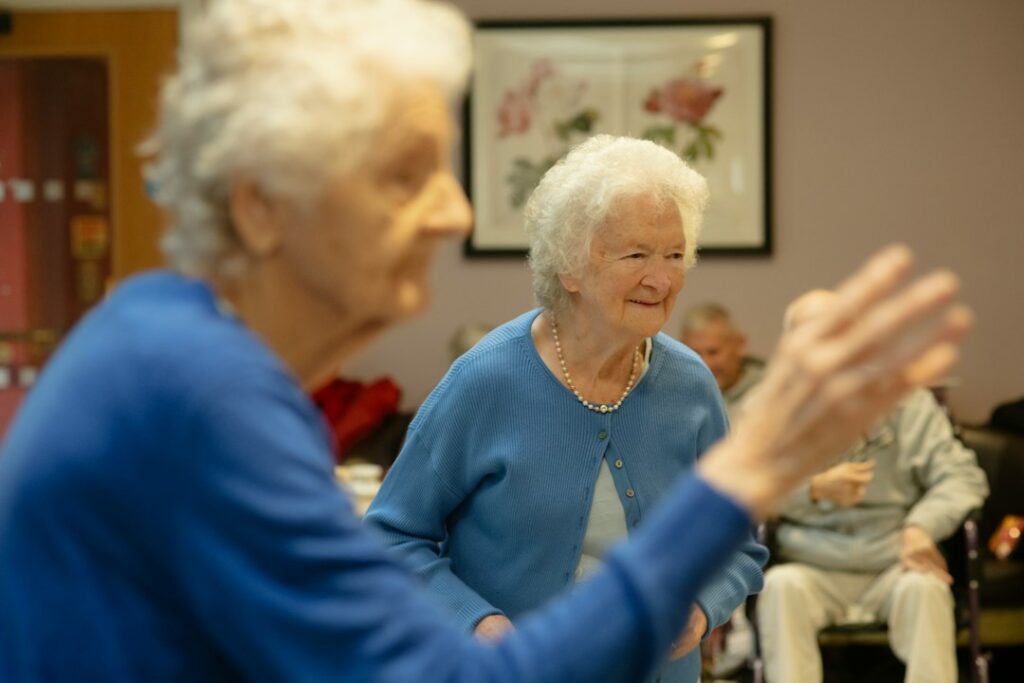
What are fitness programs like in assisted living?
Fitness programs in assisted living are usually designed around safety, mobility, and daily function rather than athletic performance. Classes may include seated exercise, walking, stretching, balance practice, light resistance training, and movement activities adapted to different ability levels.
For residents in Denver, PA, a useful program should account for individual health conditions, medication effects, past injuries, mobility devices, and comfort with group activities. Participation may take place in a common room, hallway, outdoor area, or private living space, depending on weather and the resident’s needs.
The goal is not to exercise as hard as possible. The goal is to help residents move more comfortably and confidently during ordinary activities such as standing from a chair, walking to meals, dressing, bathing, or reaching for household items.
Which types of exercise are most useful for older adults?
A balanced program generally includes four forms of activity:
- Strength exercises help maintain the muscles needed for standing, walking, lifting light objects, and transferring between surfaces. Examples include repeated sit-to-stand movements, leg extensions, wall push-ups, and exercises using light resistance bands.
- Balance exercises support steadiness during walking and changes in direction. These may include standing with feet in different positions, shifting weight from side to side, or practicing safe turns while holding a stable surface.
- Flexibility exercises help maintain comfortable movement in the shoulders, hips, ankles, and back. Gentle stretching can make dressing, grooming, and reaching easier.
- Endurance activities support the heart and lungs. Short walks, seated marching, rhythmic arm movements, and low-impact group activities can be adjusted to a resident’s pace.
Programs do not need to be strenuous to be useful. Several short activity periods may be more manageable than one long class.
Can residents participate if they use a walker or wheelchair?
Yes. Mobility equipment does not automatically prevent participation. Many exercises can be performed while seated, and standing activities can be modified with a walker, sturdy chair, parallel support, or assistance from trained staff.
A seated routine might include:
- Lifting one knee at a time
- Straightening the legs
- Moving the ankles up and down
- Reaching in different directions
- Rotating the shoulders gently
- Passing a lightweight object from hand to hand
Residents who use wheelchairs should have the brakes secured when appropriate, with footrests and other equipment positioned safely. A walker should be used according to the person’s established mobility plan rather than as an improvised exercise prop.
The most suitable activity level depends on why a resident uses mobility equipment. Someone who needs support because of weakness may have a different plan from someone managing balance changes, joint pain, or a neurological condition.
How should an assisted living program address fall prevention?
Fall prevention should be part of the entire program, not treated as a separate topic. Exercises can help improve leg strength, body awareness, and balance, but the surrounding environment also matters.
Safe sessions typically include clear walking paths, stable chairs, adequate lighting, appropriate footwear, and enough space for mobility devices. Staff should know which residents need supervision, hands-on assistance, or a seated alternative.
Residents may also benefit from practicing real-life movements, such as:
- Rising from a chair without rushing
- Turning slowly before sitting
- Reaching for an object without leaning too far
- Walking over changes in flooring
- Pausing after standing to check for dizziness
A class should never pressure someone to perform a movement that feels unsafe. Confidence develops through consistent, successful practice.
What should residents know about dizziness, pain, or shortness of breath?
Mild muscle effort is expected, but sharp pain, chest discomfort, unusual shortness of breath, faintness, sudden weakness, or new confusion should be treated as warning signs. The activity should stop, and staff should be informed promptly.
Dizziness can be related to dehydration, blood pressure changes, medication effects, blood sugar changes, or standing up too quickly. It should not simply be dismissed as a normal part of exercise.
Joint discomfort also needs attention. Some residents may tolerate gentle movement but experience problems with repeated impact, deep bending, or certain positions. Exercises can often be changed by reducing the range of motion, slowing the pace, using a chair, or taking more rest breaks.
A resident’s activity plan should reflect current health information. Changes in medical status, recent falls, surgery, illness, or medication may require a reassessment before continuing the usual routine.
How often should older adults exercise in assisted living?
A practical schedule often combines short daily movement with several planned strength and balance sessions during the week. The exact amount varies according to a resident’s endurance, health conditions, goals, and previous activity level.
A person who has been inactive may begin with five- or ten-minute periods spread throughout the day. Another resident may tolerate a longer class but still need rest afterward. Regular participation is generally more realistic when activities are brief, predictable, and varied.

Rest is part of a safe program. Residents should have time to recover between activities, especially after walking practice or strength exercises. Poor sleep, infection, pain, heat, and emotional stress can also affect how much activity a person can manage on a particular day.
Do outdoor activities work during Pennsylvania seasons?
Outdoor movement can be enjoyable when conditions are suitable, but seasonal weather affects safety. In winter, snow, ice, cold temperatures, and shorter daylight hours can make outdoor walking risky. In warmer months, heat, humidity, and dehydration may become concerns.
Indoor walking routes, seated movement classes, and hallway activities provide useful alternatives when outdoor conditions are poor. During pleasant weather, residents may benefit from supervised walks, gentle gardening activities, or seated exercises in a shaded area.
Footwear and clothing should match the conditions. Residents should also have access to water and a place to rest. Outdoor activity should be postponed when surfaces are slippery, visibility is poor, or temperatures create a health concern.
How can residents choose activities that are enjoyable?
Enjoyment matters because residents are more likely to continue activities that fit their interests and routines. Some people prefer music-based movement, while others enjoy walking, chair exercises, stretching, or practical tasks that involve standing and reaching.
Group classes can provide social connection, but not everyone is comfortable exercising in a group. A quieter option, such as individual walking practice or seated movement in a familiar space, may be more appropriate.
Residents can ask:
- Is the activity offered at a comfortable pace?
- Are seated or lower-intensity options available?
- Can the session be paused for rest?
- Does the instructor explain how to use mobility equipment safely?
- Are exercises adapted for arthritis, vision changes, or balance concerns?
- Can family members or caregivers understand the resident’s activity plan?
The most useful program is one that respects the resident’s abilities while offering gradual opportunities to maintain movement.
What questions should families ask about a fitness program?
Families and residents may want clear information about how activities are planned and supervised. Useful questions include:
- How are new residents screened for exercise needs?
- How are fall risks and mobility limitations considered?
- What happens if a resident becomes dizzy or fatigued?
- Are attendance and changes in ability documented?
- Are activities adjusted after a fall, illness, or hospitalization?
- How are outdoor activities modified during unsafe weather?
- Can residents participate at different levels within the same class?
Fitness in assisted living is not limited to a formal exercise class. Safe walking, repeated daily movements, transfers, stretching, and participation in ordinary activities all contribute to physical function. A consistent, adaptable approach can help residents preserve confidence and independence while respecting the health needs that change over time.
